In industrial boots the lace is a safety component. Abrasion resistance, cored construction and batch consistency are non-negotiable.
On a fashion sneaker, a broken lace is an annoyance. On a safety boot on a plant floor, it is a hazard: an operator stepping on a loose lace next to moving machinery is an incident no safety manager wants to report. That is why industrial footwear specifies the lace as a technical component, not an accessory.
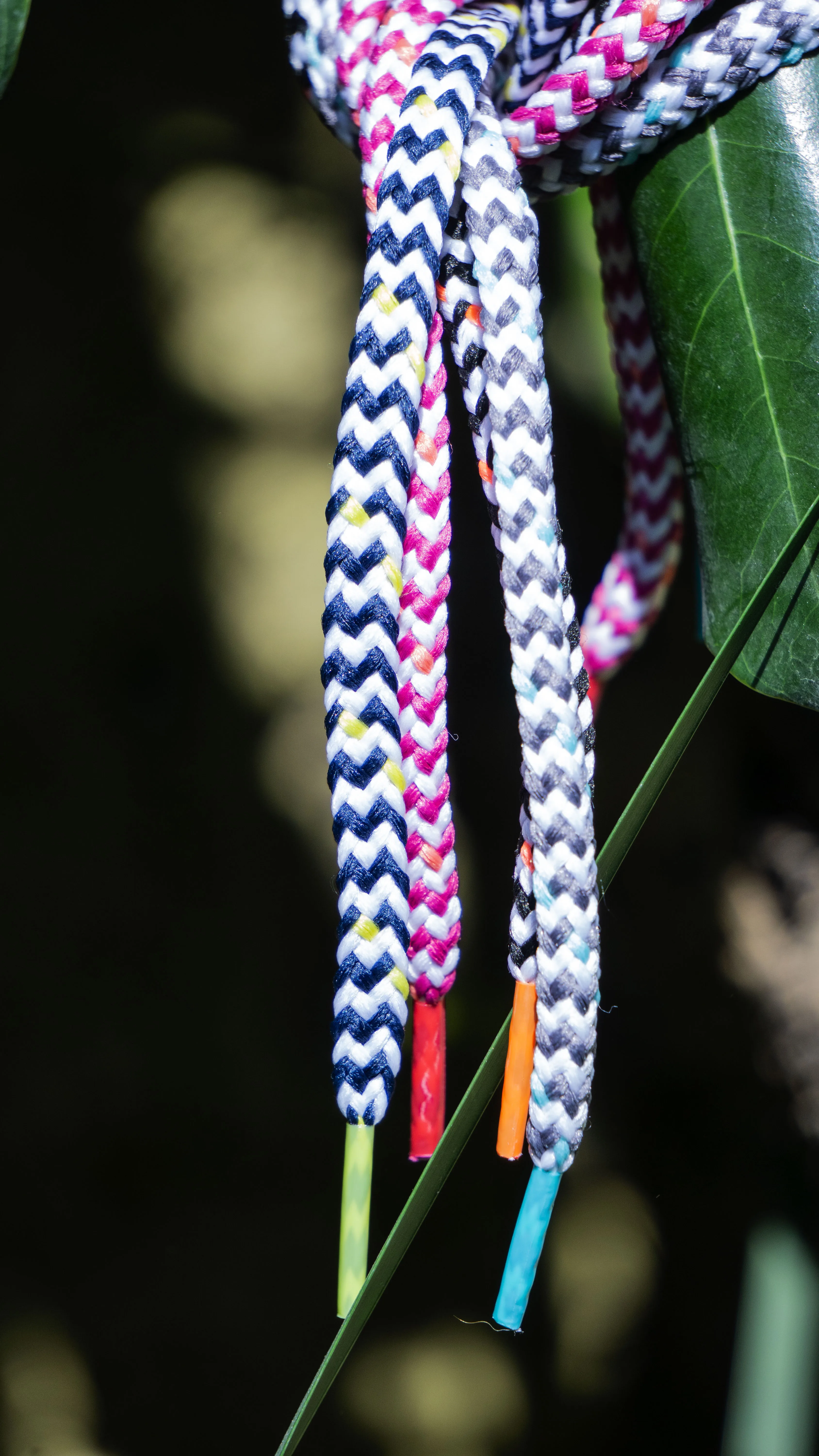
The first requirement is construction. For industrial boots the practical standard is a braided round cord with a core: the outer braid withstands abrasion against metal eyelets and hooks, and the inner core keeps tensile strength even as the outside wears. A coreless flat lace designed for casual shoes does not belong on a work boot.
The second is material. High-tenacity polyester is the workhorse: strength, low elongation and stability under moisture. Nylon adds elasticity where needed. And length matters more than in any other footwear: an 8-eyelet boot with hooks calls for 140 to 160 cm; going short forces the user to knot badly, and a bad knot is a loose lace.
The third is the tip. In industrial environments the heat-cut tip — thermally sealing the textile itself — eliminates the plastic piece that cracks under rough use. When acetate tips are specified, length and diameter must be defined so they survive threading through tight eyelets.
The fourth, and the one that separates a serious supplier: consistency and traceability. Safety footwear gets certified; its components must be identical batch after batch. That demands a supplier who produces against a written specification with an auditable quality system. Our plant operates under ISO 9001:2015 and every order is manufactured against a confirmed spec sheet.
If you manufacture industrial, hiking or certified safety footwear, review what you are being supplied today: construction, core, material, length and tip. If something does not add up, send us the spec — or the problem — and we will propose the right lace. We have spent 37 years solving exactly this for the Mexican footwear industry.