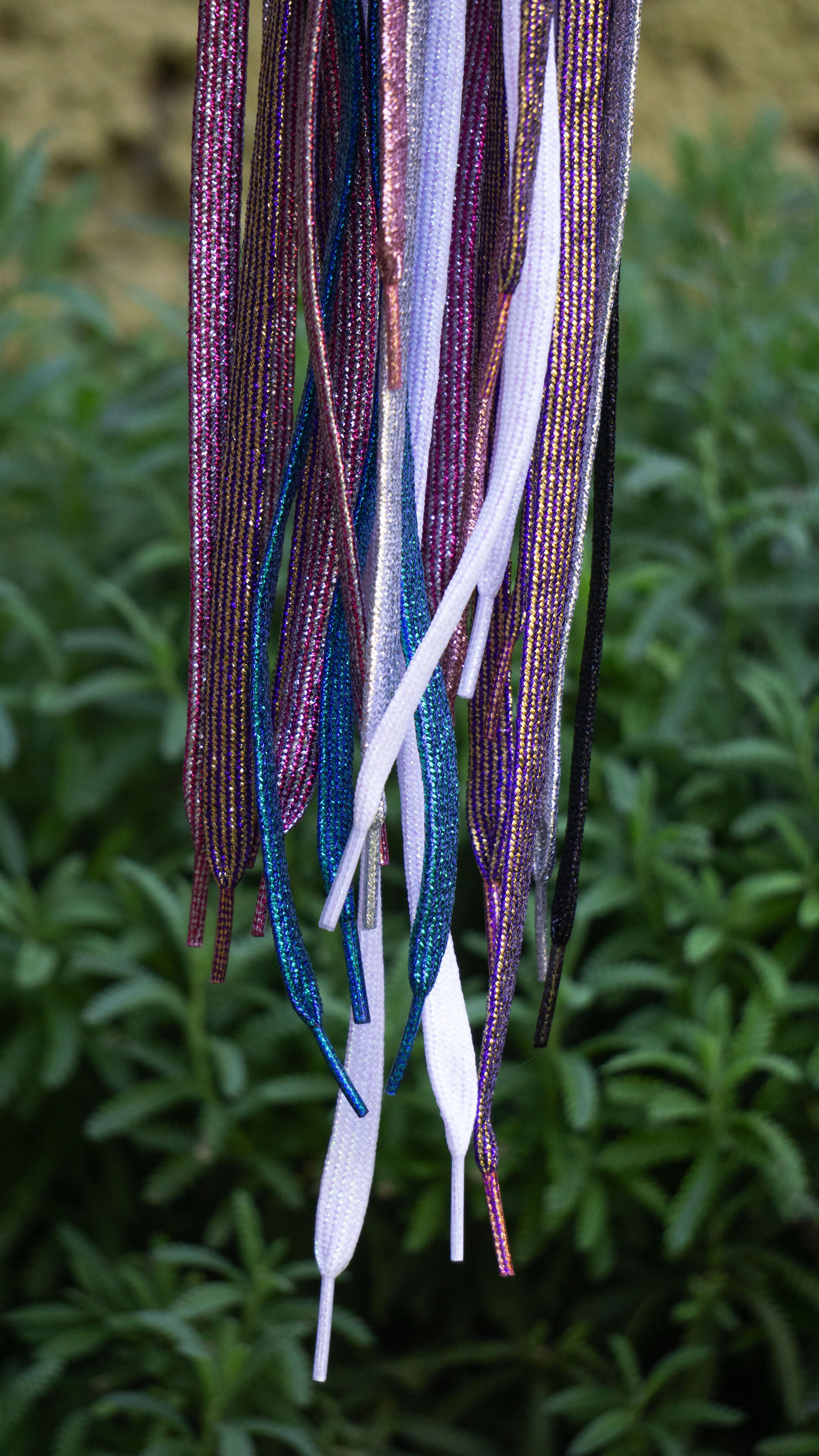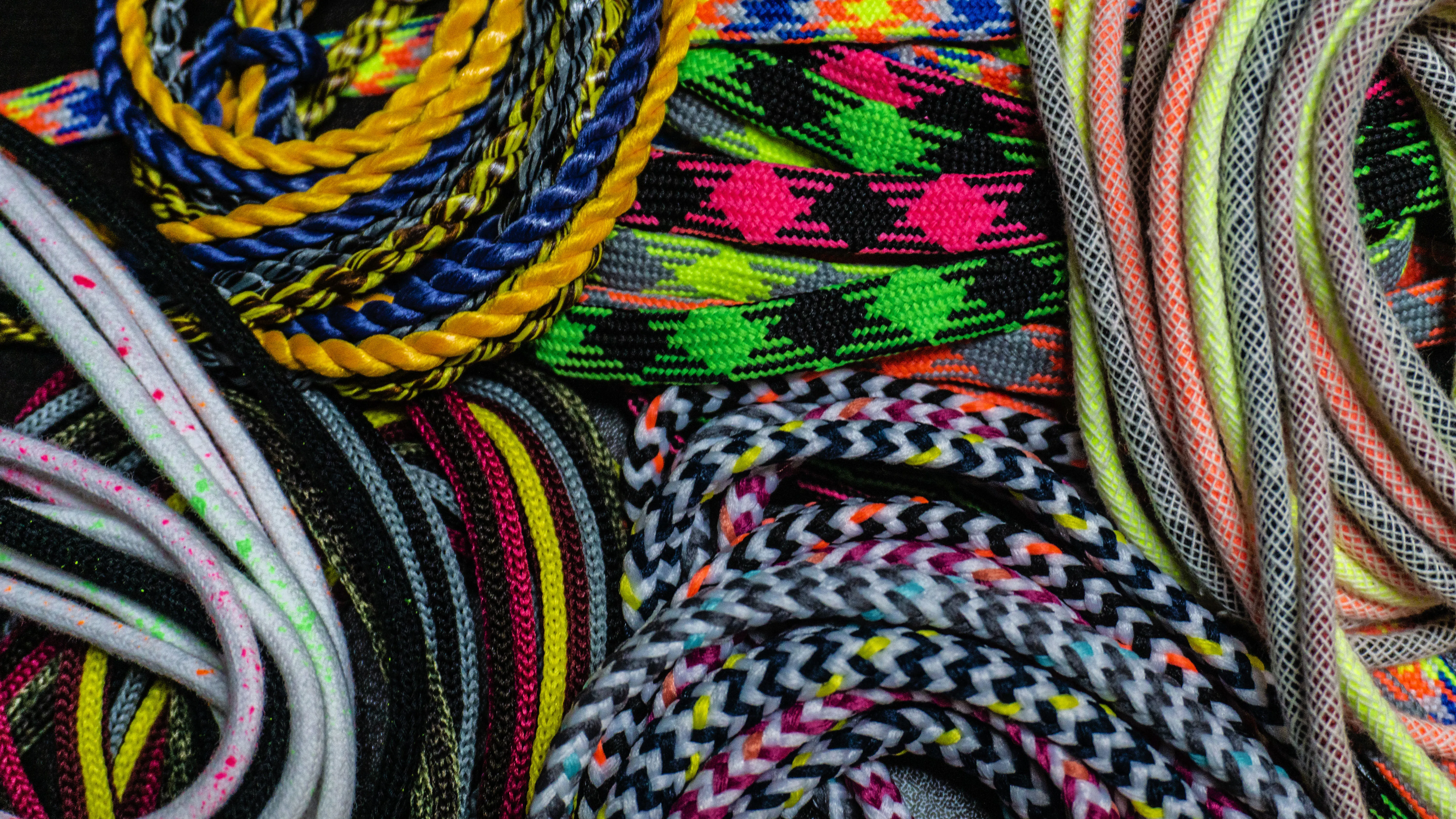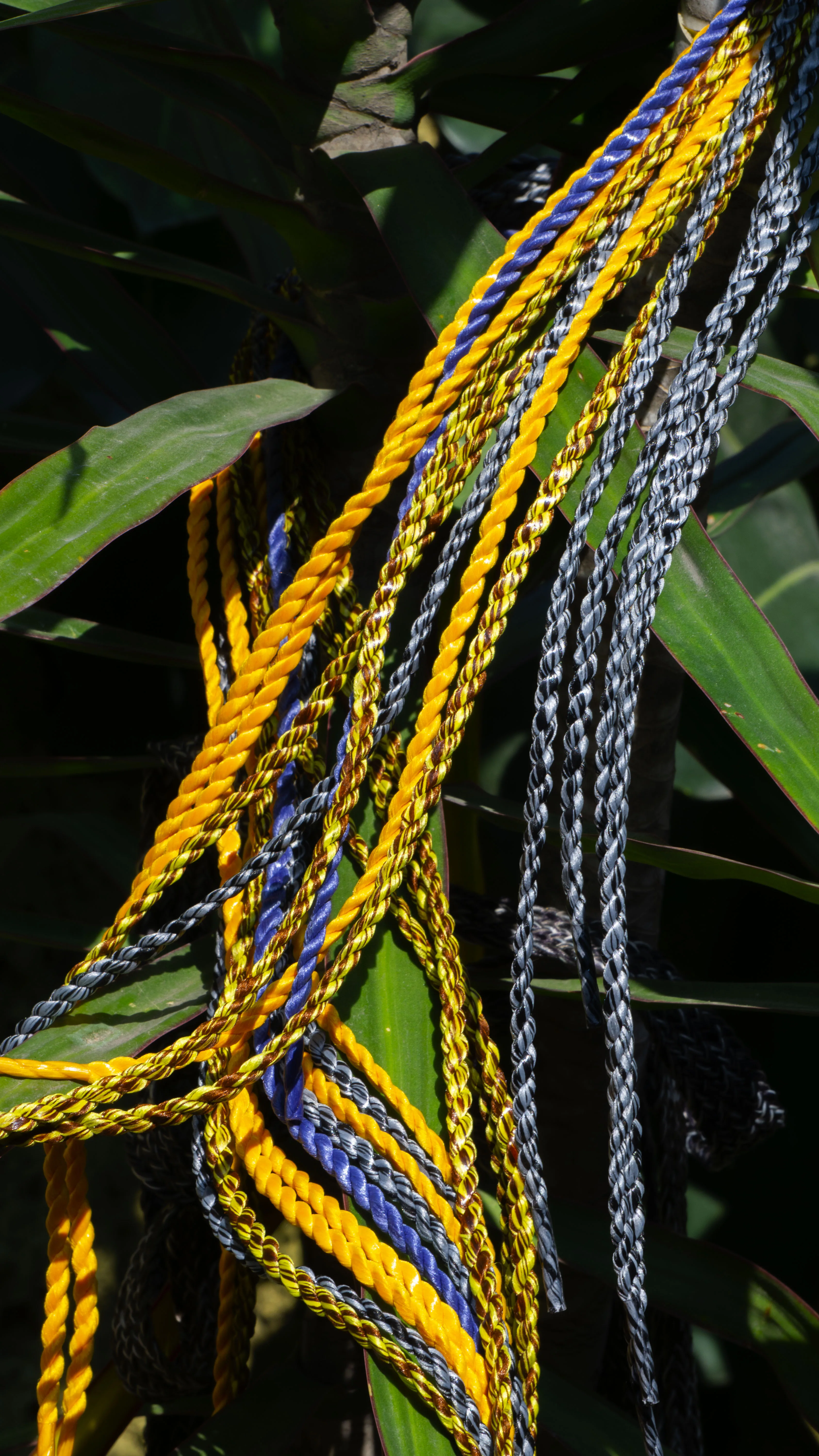
What to check before buying woven tapes and ribbons in volume: construction, material, width, color and put-up — and why buying factory-direct changes both cost and consistency.
Textile tape is one of those inputs nobody notices until it fails: a handle that frays, a drawcord that won’t slide, a decorative trim that loses color by the third wash. If you buy tapes and ribbons in volume — for apparel, footwear, packaging, furniture or uniforms — the difference between a consistent lot and a problematic one is usually decided before the purchase order: in the specification and in the supplier.
Start with construction. A flat woven tape (grosgrain-type) behaves differently from a flat braided cord: woven tape keeps a stable width and resists longitudinal tension, while braid gives more flexibility and better drape. For handles and pulls, woven tape wins; for drawstrings and adjustment cords, braid. If your product demands both — stability and a soft hand — request samples of both constructions and test them mounted on your actual product, not loose.
Material defines long-term behavior. Polyester dominates the industrial market for abrasion resistance, colorfastness and price; cotton delivers the natural finish that premium packaging and fashion buyers value, at the cost of higher shrinkage and moisture sensitivity. Blends aim for the middle. A serious manufacturer will tell you plainly which fiber suits your application instead of selling you whatever is in stock.
Then comes the full specification: width (standards run from 5 mm to over 50 mm), gauge or thickness, color — with a Pantone reference if your brand requires it — edge finish, and put-up (rolls or spools, and at what length). Putting those six points in writing eliminates most surprises. If a supplier cannot confirm each point in their quote, treat it as a red flag.
Buying factory-direct has two advantages no reseller can match: no-middleman pricing and traceability. When the loom and the finishing process live in the same plant, a quality claim gets investigated in days with the lot in hand — it doesn’t vanish into a chain of importers. At Andina Textil México we manufacture tapes, shoelaces, cords and elastics in León, Guanajuato, shipping throughout Mexico and exporting to the United States, El Salvador, Guatemala and Colombia.
If you are evaluating a tape supplier, request a quote with your real specification: application, construction, material, width, color and estimated monthly volume. Our sales team replies within 24 to 48 business hours, and we can send physical samples before you commit to an order.